
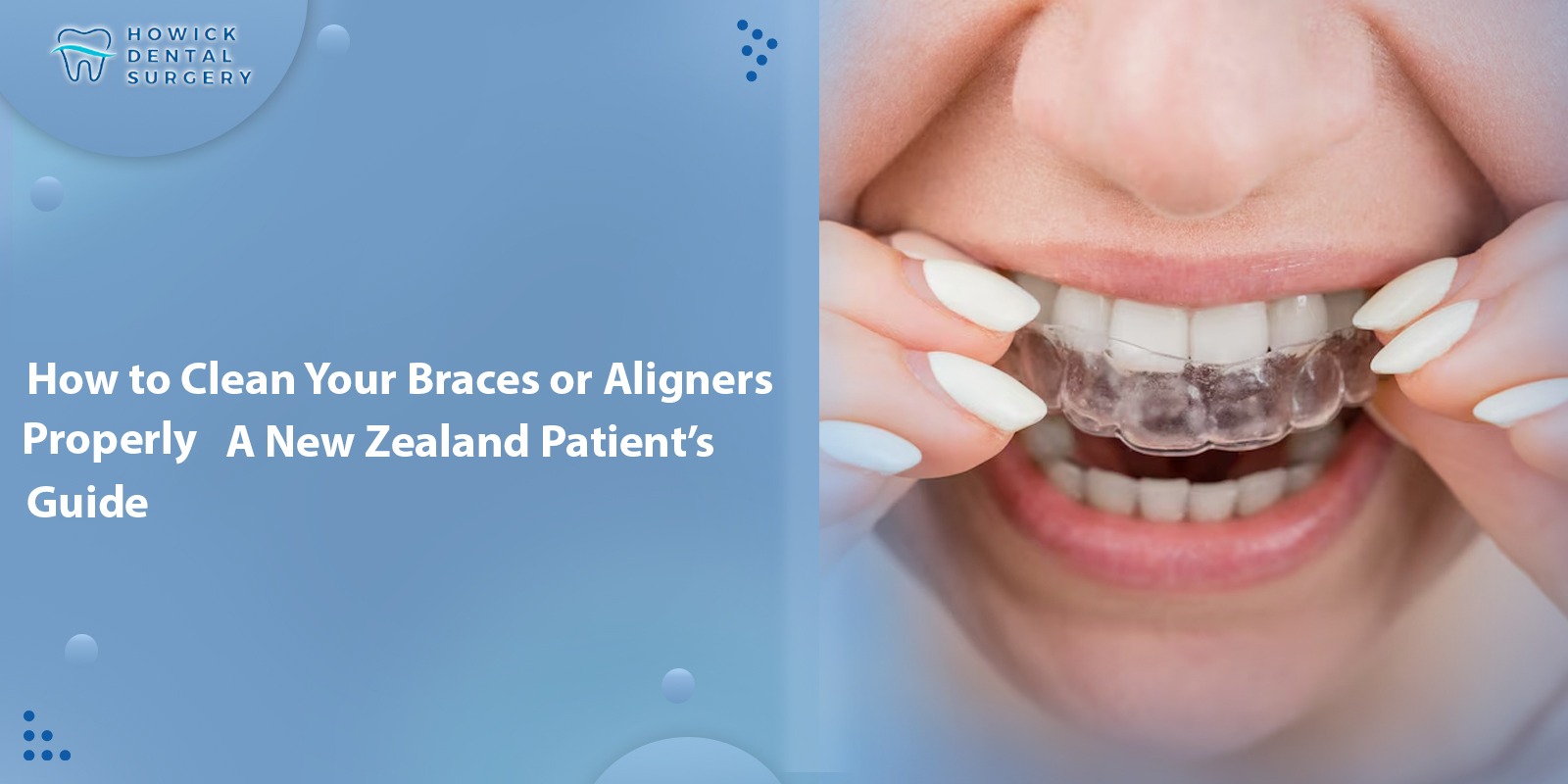
If you’re using braces or clear aligners for orthodontic treatment, keeping them clean is essential — not just for your smile, but for your oral health. Below is a practical, NZ-based guide (inspired by practices at clinics like the Howick Dental Surgery) on how to maintain braces or aligners for best results.
🪥 Why Cleaning Matters
- With braces, food and plaque can easily gather around brackets and wires, increasing risk of cavities, gum disease or decalcification (white spots) on enamel.
- With clear aligners (like Invisalign), poor hygiene may lead to stains, bad odour, or bacterial buildup — which also undermines treatment.
- Clean aligners and teeth help ensure smooth tooth movement and avoid treatment delays or complications.
✅ How to Clean Braces
- Brush after every meal/snack— Use a soft-bristled toothbrush (manual or electric), and clean on all tooth surfaces: outer, inner, chewing surfaces — especially around brackets and wires. Aim for at least two minutes each time.
- Floss daily— Use a floss threader or orthodontic floss to get between teeth and under wires. This helps remove trapped food particles.
- Use interdental brushes or water-flossers (if recommended)— These small tools help clean the tight spots around brackets and between teeth more thoroughly than a regular brush alone.
- Rinse with mouthwash or fluoride rinse(if recommended) — This can help reduce bacteria and strengthen enamel, especially during long treatment periods.
- Be mindful of diet— Avoid hard, sticky, or chewy foods (e.g. nuts, toffees, ice) which might damage brackets, wires or trap debris. Opt for softer foods or cut hard foods into small pieces.
🌟 How to Clean Clear Aligners (e.g. Invisalign)
Because aligners are removable, cleaning is easier — but needs to be done carefully:
- Remove aligners before eating or drinking anything except water. This prevents staining, sugar or acid exposure, and food debris from getting trapped.
- Brush and rinse after every removal— Use a soft-bristled toothbrush and lukewarm or cool water to clean both inside and outside surfaces. Many NZ dental practices recommend gentle liquid soap (or aligner-specific cleaning solution) instead of regular toothpaste.
- Avoid hot water or harsh cleaners— Hot water can warp plastic aligners; abrasive toothpaste or strong cleaners can scratch or cloud the material, making them more visible and prone to plaque buildup.
- Deep-clean aligners periodically— Once or twice a week, soak aligners in a dedicated cleaning solution (or mild soap/water) to remove bacteria and odours. Some NZ practices recommend cleaning crystals or denture-style cleaners.
- Brush and floss your teeth before putting aligners back in— This ensures no food particles remain trapped between teeth and aligner, reducing risk of decay or bad breath.
- Store aligners safely when not in use— Use the protective case provided, to avoid them picking up dirt or being lost or damaged.
📅 Daily & Weekly Hygiene Routine (Recommended)
| When / Frequency | What to Do |
| After every meal / snack | Brush teeth (or rinse if brushing not possible), remove aligners/braces debris, insert aligners/braces back. |
| Twice a day (morning & night) | Brush thoroughly, floss, clean under wires (for braces), or clean aligners + rinse before reinserting. |
| Daily (for aligners) | Rinse or gently brush aligners after removal. |
| 2–3 times per week | Deep-clean aligners with cleaning solution (if using aligners). |
| Weekly or per dental schedule | Check aligner/brace condition; visit dentist/orthodontist for regular monitoring and cleaning. |
💡 Tips & Common Mistakes to Avoid
- Don’t use regular toothpaste on aligners— It’s too abrasive and can scratch the plastic. Use mild, uncoloured soap or aligner cleaning products.
- Don’t use hot or boiling water— It can warp or deform plastic aligners.
- Don’t skip flossing or interdental cleaning— Brackets and wires hide food and plaque; neglecting them increases risk of decay or gum disease.
- Don’t leave aligners exposed— Always store them in their protective case; avoid wrapping them in paper or leaving them on surfaces where they can pick up bacteria or get damaged.
Final Thoughts
Maintaining braces or aligners isn’t just about straightening your teeth — it’s about preserving your overall oral health. Whether you have metal braces or clear aligners like Invisalign (as offered by Howick Dental Surgery in NZ) howickdentalsurgery.co.nz , a consistent cleaning routine, combined with mindful eating and proper storage, will help you avoid cavities, gum issues, staining, and other complications.
If you follow these guidelines, you’ll not only keep your braces or aligners hygienic you’ll also set yourself up for a healthy, radiant smile when your treatment completes.
Leave a Reply