
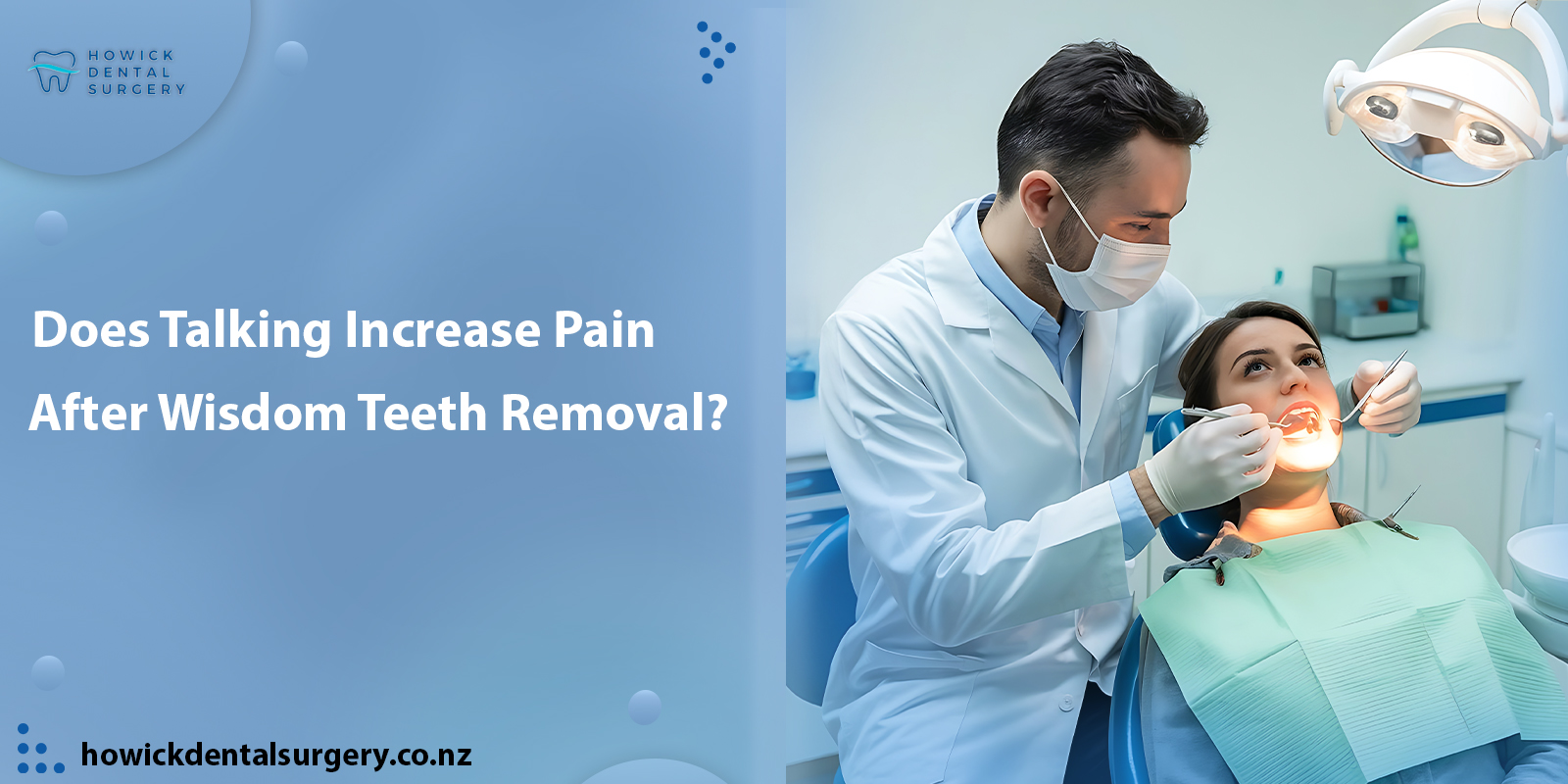
Recovering from a wisdom tooth extraction can feel uncomfortable, especially during the first 48 hours. One of the most common questions patients ask is whether talking too much can worsen pain after surgery. The short answer is yes, excessive talking immediately after the procedure may increase discomfort, swelling, and healing time.
After a wisdom tooth is removed, the surrounding muscles, gum tissue, and jawbone begin healing. Speaking frequently moves the jaw muscles repeatedly, which can strain the surgical area and irritate the blood clot forming inside the socket. This clot is essential because it protects the bone and nerves underneath while supporting proper healing. If disturbed, it may lead to a painful condition called dry socket. According to New Zealand oral health guidance, dry socket commonly develops within three to four days after surgery when the clot becomes dislodged or fails to form correctly.
Most dentists recommend minimising unnecessary conversation during the first day following a wisdom tooth extraction. Gentle speaking is generally fine, but prolonged phone calls, laughing excessively, singing, or shouting can increase jaw movement and pressure around the extraction site. Patients who have impacted wisdom teeth removed often experience tighter jaw muscles and swelling, making extended talking more uncomfortable.
Research and clinical observations also show that swelling peaks around 24 to 72 hours after surgery. During this period, overusing the jaw may worsen inflammation and tenderness. Applying an ice pack for 10–15 minutes every hour during the first day can help reduce swelling and improve comfort.
At Howick Dental Surgery, dentists explain that wisdom teeth often become impacted or grow at awkward angles, leading to infection, pain, gum disease, and pressure on nearby teeth. In many cases, surgical removal becomes the most effective long-term solution.
Patients across New Zealand frequently discuss recovery experiences online, with many reporting that resting the jaw during the first few days significantly improves comfort. Others mention that procedures involving impacted teeth or surgical extraction require more recovery time compared to simple removals.
To support smooth healing after your extraction, dentists usually recommend:
- Resting for the remainder of the day
- Avoiding vigorous talking or chewing
- Eating soft foods such as yoghurt, soup, mashed vegetables, or smoothies
- Avoiding smoking and alcohol
- Drinking water regularly
- Following medication instructions carefully
- Rinsing gently with warm salt water after 24 hours
If pain suddenly worsens several days after surgery, or if swelling, fever, or difficulty swallowing develops, contact a dentist for wisdom tooth extraction immediately. These symptoms may indicate infection or dry socket requiring professional treatment.
Modern dental clinics in New Zealand now use advanced imaging, minimally invasive surgical techniques, and sedation options to improve patient comfort and recovery outcomes. Choosing an experienced dentist for wisdom tooth extraction can make a significant difference in reducing complications and ensuring a faster return to normal daily activities.
Leave a Reply